Basic Characteristics of External Locking Devices
Sep 05, 2026
The core characteristic of an external locking device is its ability to achieve rigid locking directly at the point of contact between the switch rail and the stock rail. It provides high locking force and a significant safety margin, making it widely suitable for high-speed and heavy-haul railway applications.
Structural Composition
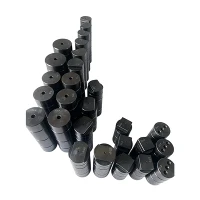
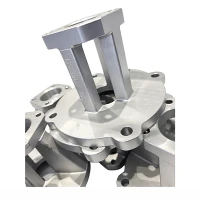
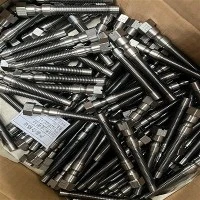
The system consists of five primary components: the locking rod, locking hook, locking frame, switch rail connector, and locking block. All components are forged from high-quality carbon structural steel and strengthened through heat treatment.
The locking frame is secured directly to the stock rail, while the switch rail is linked to the locking hook via a connector. This design ensures a short force-transmission path, eliminating unnecessary intermediate transmission elements.
In the prevalent hook-type configuration, a notch at the base of the locking hook aligns precisely with a protrusion on the locking rod, creating a stable, triangular load-bearing structure.
Operational Principles
The system employs a "split-action" design: the two switch rails are not interconnected, allowing one to move before the other during a switch operation, which significantly reduces the required starting torque.
The operation is strictly divided into three distinct phases-unlocking, switching, and locking-with clear boundaries between each stage to prevent overload caused by the compounding of forces.
Once locked, the locking force is transmitted directly to the stock rail through the locking block and locking frame, ensuring that these components are subjected to virtually no bending moments.
Safety Performance
The device offers excellent vibration isolation and impact resistance; lateral impact forces generated as a train traverses the turnout are absorbed directly by the external locking structure, with minimal force transmitted to the switch machine itself.
Even in the event that a connecting rod breaks, the device maintains its locking function, offering a level of safety redundancy far superior to that of internal locking mechanisms.
As the switch rail makes contact with the stock rail, the locking hook slides along an inclined surface, generating a secondary force-amplification effect. This helps counteract the risk of gaps caused by wind pressure or thermal expansion and contraction, ensuring highly reliable contact between the rails.