Fundamental Characteristics Of A Spindle
Oct 05, 2026
The core characteristics of a spindle can be summarized by three primary performance indicators: high precision, high rigidity, and strong speed adaptability. Complemented by specific structural and functional features, the spindle serves as a critical component that determines both the machining quality and operational efficiency of a machine tool.
Core Performance Characteristics
High Rotational Precision: During rotation, the radial and axial runout of the spindle are kept to an absolute minimum-with test-bar runout often controlled within 0.005 mm-which directly dictates the machining precision of the workpiece.
Excellent Static and Dynamic Rigidity: Determined by the spindle's bending rigidity, bearing stiffness, and damping, this ensures the component can resist deformation under cutting loads, thereby maintaining machining stability.
Strong Speed Adaptability: Spindles can operate across a wide range of rotational speeds; some high-end models can reach tens of thousands of RPM, meeting the diverse speed requirements of various machining scenarios.
Low-Noise Operation: Subjected to G1/G0.4-grade dynamic balancing, these units exhibit minimal vibration and low noise during high-speed operation, ensuring smooth performance.
Structural and Functional Characteristics
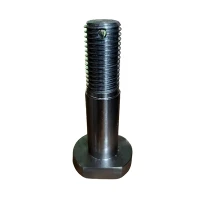
Typical Stepped-Shaft Geometry: The diameter decreases progressively from the front to the rear, with relief grooves (undercuts) positioned between the steps to facilitate assembly and axial positioning.
Transmission Interface: Equipped with keyways or splines, the spindle allows for secure circumferential attachment to transmission elements such as gears or pulleys, enabling efficient transfer of motion and torque.
Wear-Resistant Spindle Nose: The taper tolerance at the spindle nose is controlled within 0.003 mm, with high surface hardness to ensure precise positioning of fixtures and cutting tools, as well as ease of mounting and removal.
Modular Composition: Comprising the spindle body, high-precision bearings, and transmission components (gears/pulleys), this core assembly is a standard feature in most machine tools.
Operational Characteristics
Versatile Lubrication Methods: Supports various lubrication systems-such as grease, oil mist, or oil-air lubrication-tailored to specific rotational speeds and operating conditions to minimize friction-induced heat. Reliable sealing and protection: Advanced labyrinth-style sealing structures are commonly employed to prevent impurities from entering the bearings, thereby extending the service life of components.
Intelligent monitoring capabilities: Modern spindles can monitor parameters such as motor temperature, bearing temperature rise, and thermal expansion in real time, enabling operational status awareness and early fault warning.